
What does it mean to form the heart? How can one reach it? How are the sentiments of the Son shaped within a person’s life? Are we able to recognise what we feel?
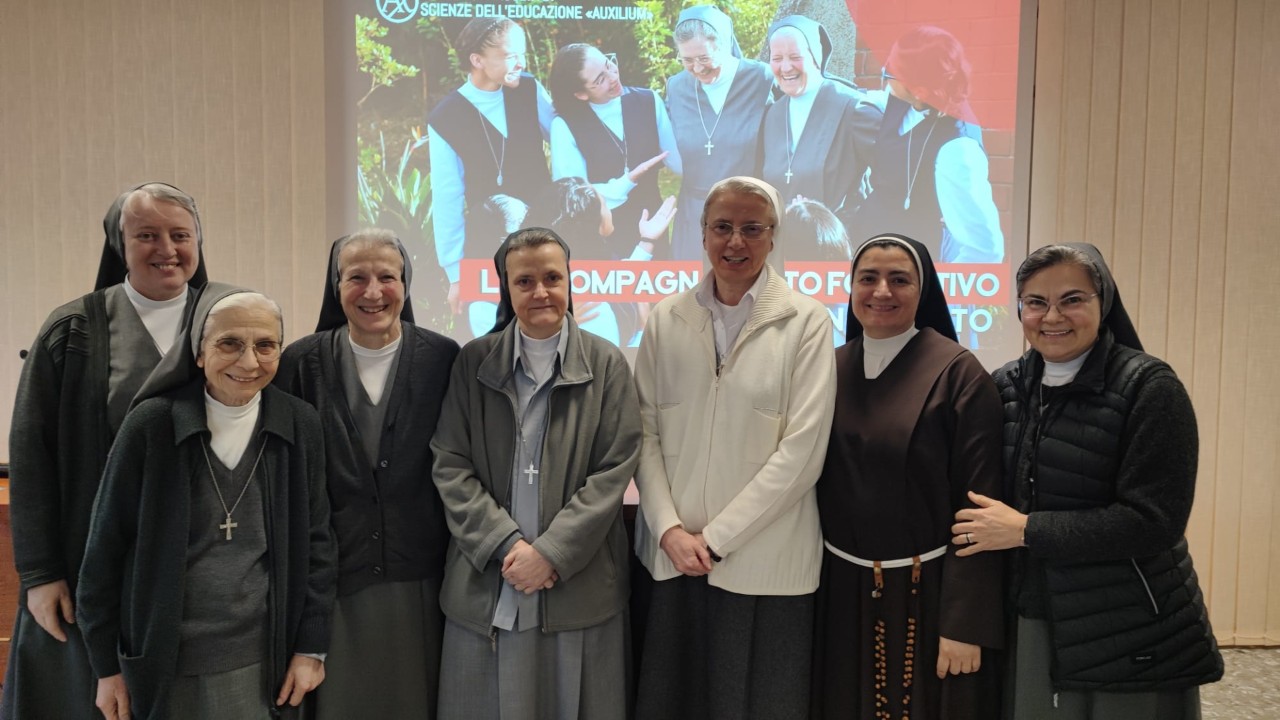
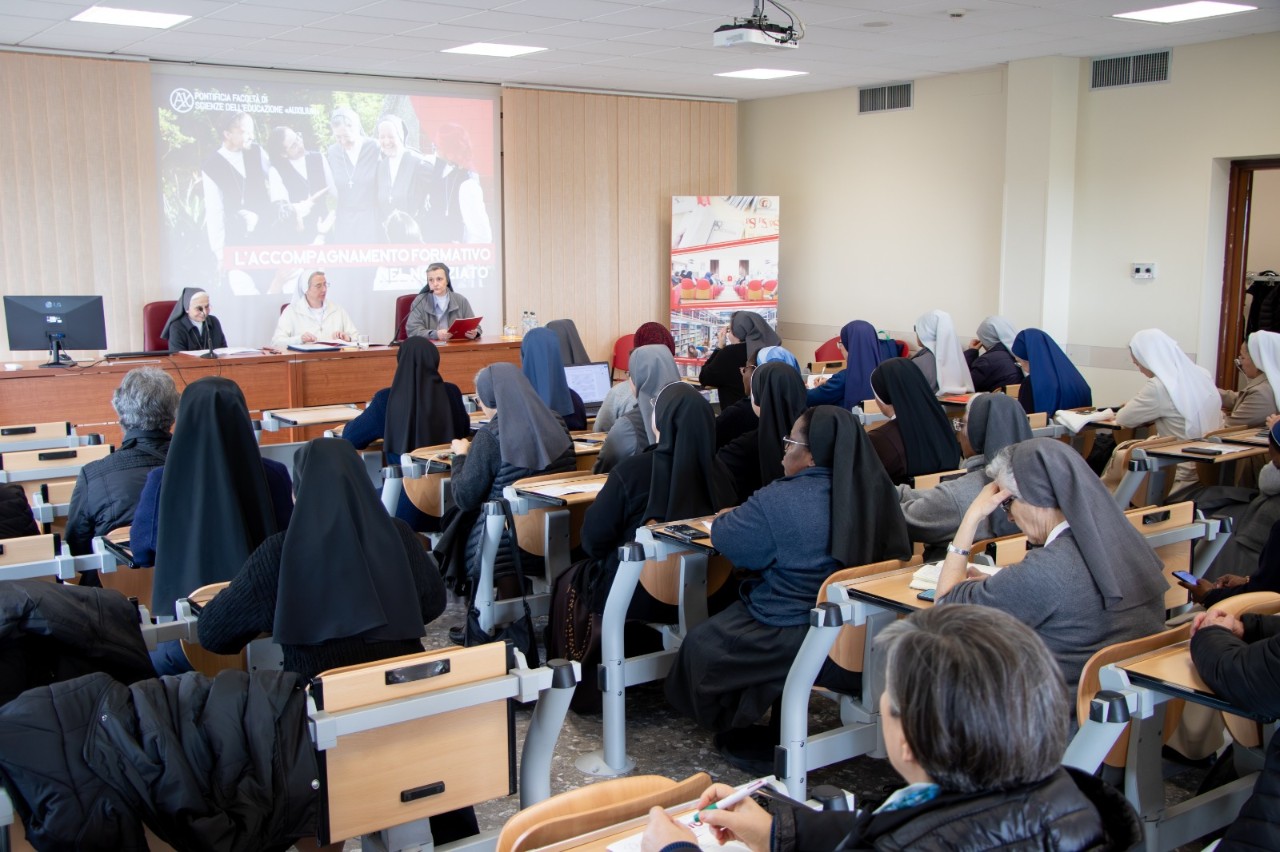
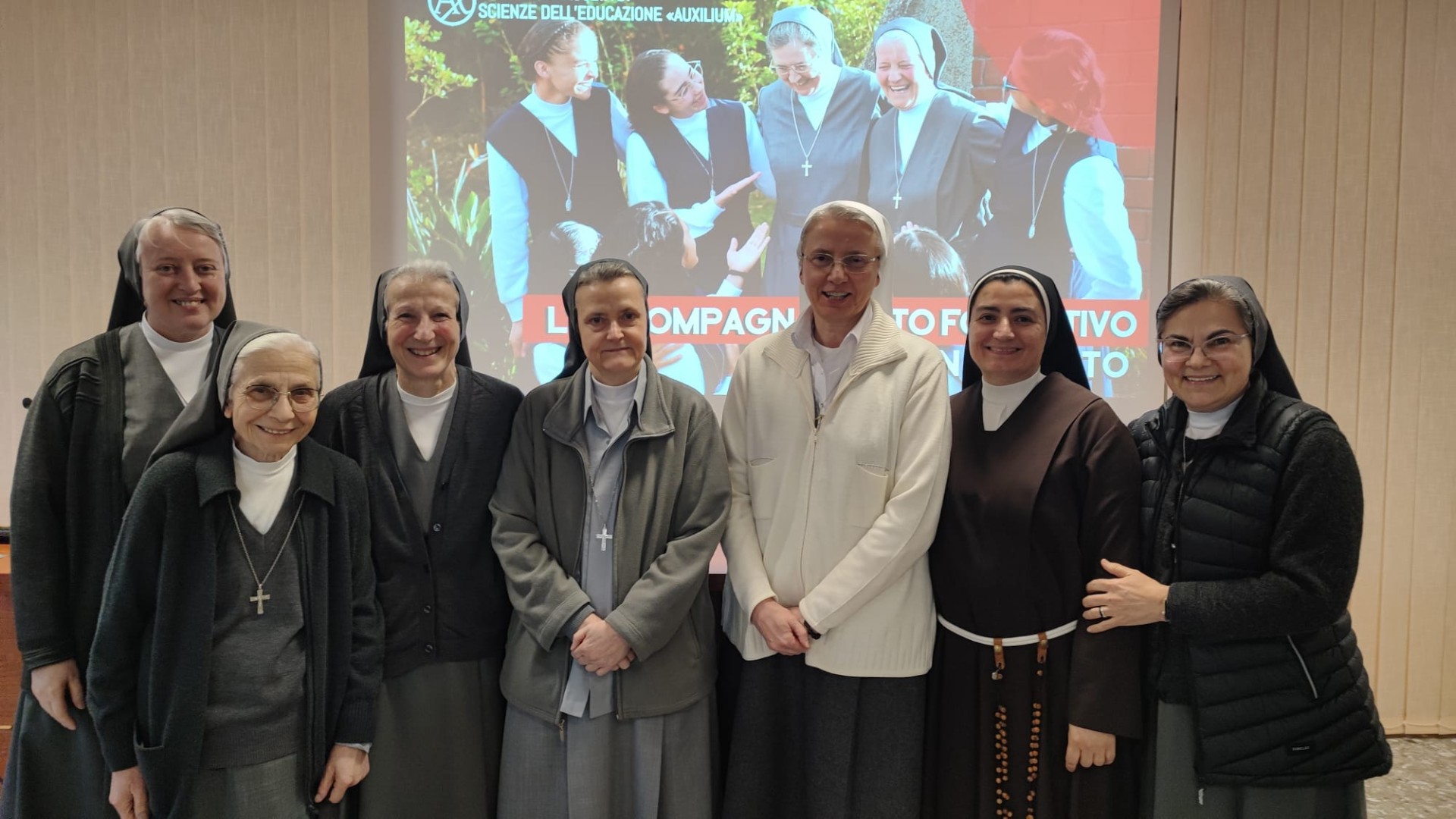
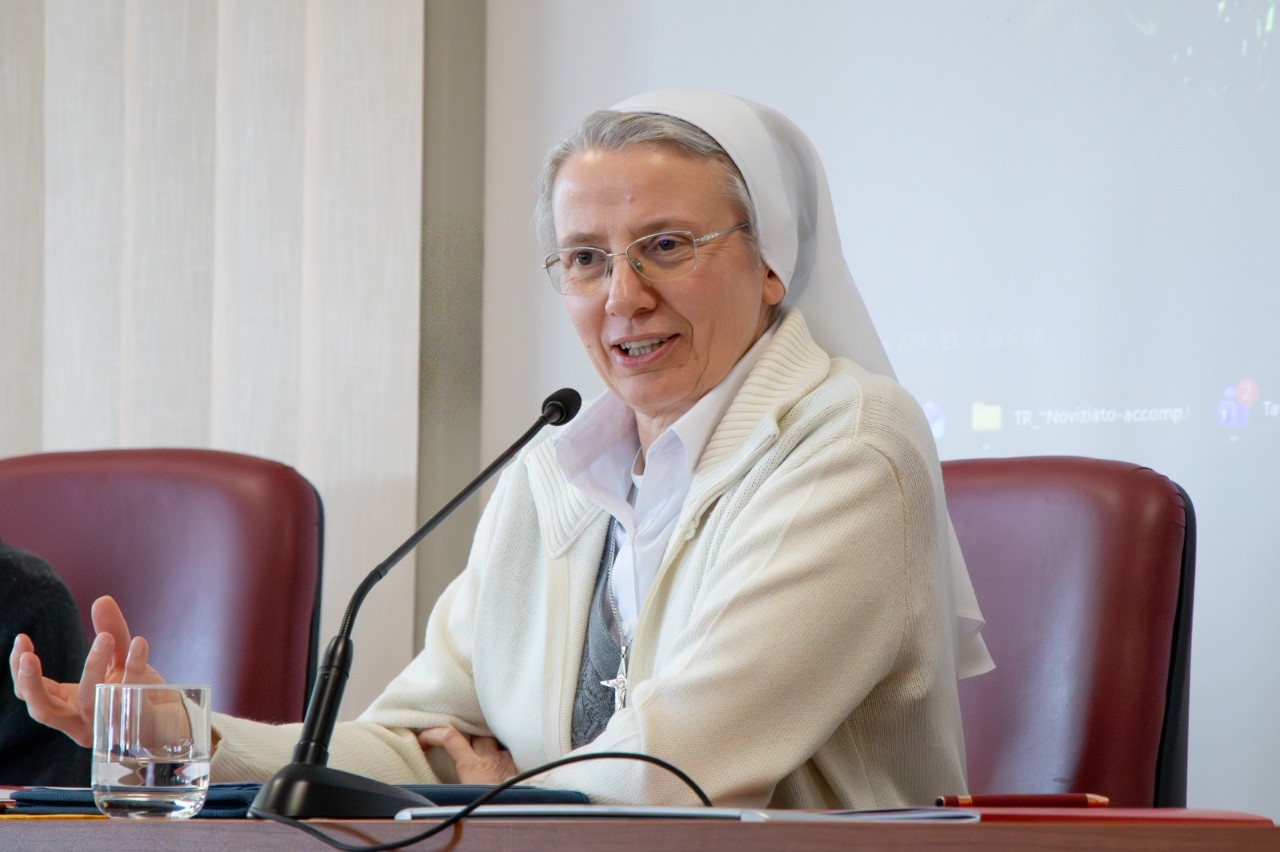
These were the questions explored by Sr Simona Brambilla, MC, Prefect of the Dicastery, during her address on 26 March 2026 at the Pontifical Faculty of Educational Sciences “Auxilium” in Rome, as part of a round table dedicated to formative accompaniment in the novitiate. Around fifty formators from various Institutes of Consecrated Life took part, together with more than two hundred participants connected from different countries. The discussion was further enriched by the experience shared by several Novice Mistresses.
Beginning with the Gospel image of the disciples on the road to Emmaus, and drawing on the magisterium of Pope Francis, Pope Leo XIV and ecclesial documents on formation in consecrated life, Sr Simona highlighted three essential attitudes for the ministry of formation: valuing differences, accompanying with care and acting with courage.
The reflection was also enriched by experience gained through dialogue with consecrated men and women, superiors, formators and formatrices.
At the heart of the reflection was the novitiate as a time of integral initiation into consecrated life, under the direct guidance of a Novice Mistress, leading towards a union with Christ ever more “alive and vibrant in feelings, thoughts, gestures, actions and daily choices”.
Valuing Differences
How can the uniqueness of each vocation be safeguarded without falling into uniformity?
In her address, Sr Simona returned to the image of the “rough diamond”, proposed by Pope Francis in one of his reflections on formation: a precious reality that calls for patient work in order to reveal its full beauty.
Each person brings with them a history, a particular sensitivity, gifts and limitations. Communities themselves are shaped by differences in personality, culture and experience. Whenever rigidity and defensiveness prevail, everything closes in on itself; when the value of the other is truly recognised, differences become a source of exchange, mutual enrichment and shared growth.
Accompanying with Care
How can one reach the deepest dimensions of the person through an integral, ongoing and shared formation? How can people care for one another so that the heart may allow itself to be moved and transformed by the Gospel?
A recurring situation can often be observed: consecrated men and women may find it easy to explain many issues, yet struggle to recognise sensations, feelings and interior movements. There is an urgent need to cultivate the inner life in order to learn how to love — and to love as Jesus did.
The synodal process strongly highlighted the need for an integral and ongoing formation capable of embracing every aspect of life.
For this reason, personal accompaniment remains indispensable for growth in interior freedom. Deep wounds and inner blockages can become barriers that a person is unable to overcome alone. No one can accompany another along a path they themselves do not know. Those entrusted with formation are themselves called to undertake a serious and sustained journey of accompaniment.
Acting with Courage
How can one enter into one’s own heart and gather together the fragments of life? How can one collect and direct one’s energies towards God? How can one learn to discern the movements of the heart?
If formation is a journey of transformation involving the whole person, it is essential to cultivate whatever leads to Christ and to distance oneself from whatever draws one away from Him.
Reference was made to the words addressed by Pope Leo XIV to seminarians: without care for the interior life, even an authentic spiritual journey becomes impossible, because it is precisely within the heart that God speaks and asks to be heard. Part of this interior work is the discipline of recognising the movements of the heart and the feelings that shape one’s life.
When the heart is crowded with desires, dreams and ambitions, confusion can arise. For this reason, the interior life is called to preserve and ponder, gathering together the fragments of life in prayer.
Hence discernment is presented as a path leading from fragmentation to interior unity and directing one’s energies towards God. It is a journey that helps one grow in coherence between the ideal that is proclaimed and the reality that is daily lived.
Silence, prayer, honest dialogue and personal accompaniment thus become essential. When this journey reaches maturity, the Gospel takes shape in life.